PFAS in Food-Contact Packaging: Limit Values and Analyses
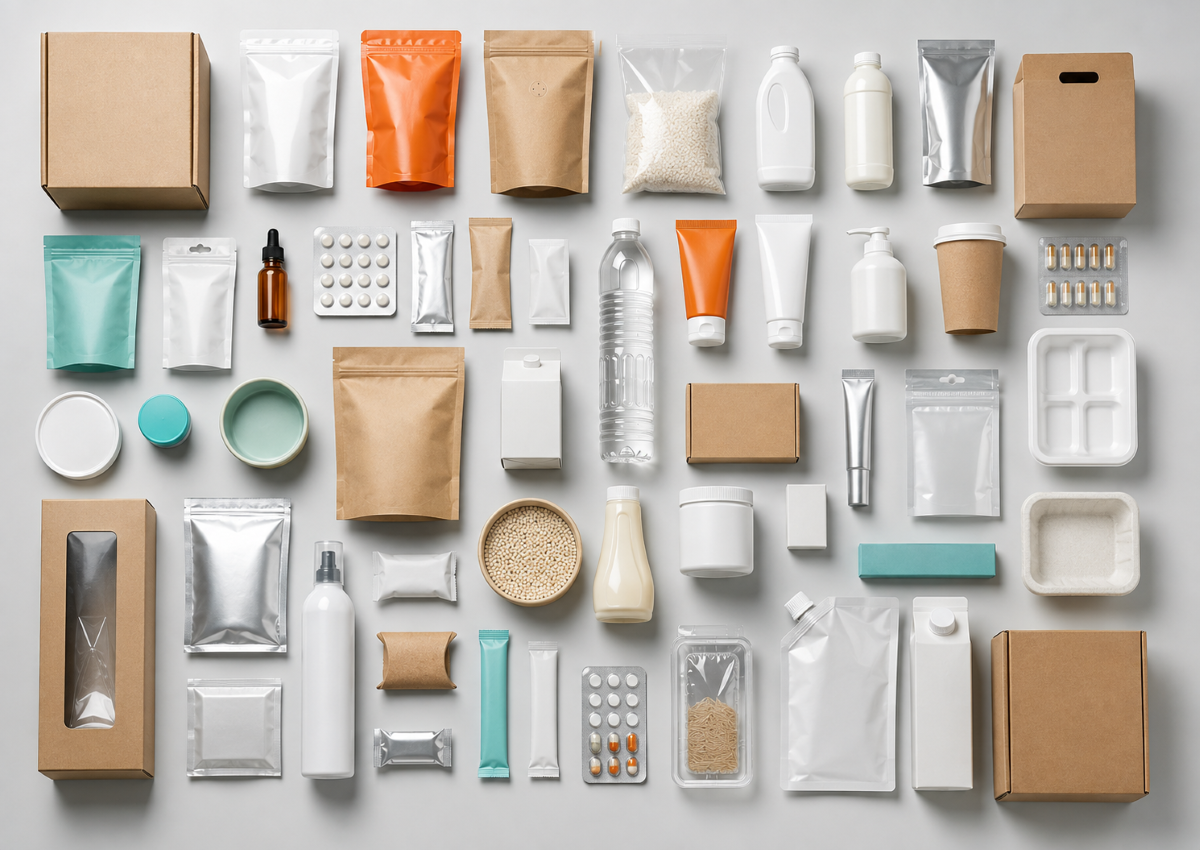
Grease-resistant cartons, coated paper, functional plastic layers, or complex composite materials: With food packaging , it is often not apparent from the outside which substances were used to achieve the desired barrier properties. Furthermore, material data and supplier documentation do not always provide sufficient information about fluorinated compounds.
For packaging manufacturers, food producers, and distributors, this is becoming increasingly relevant. This is because under the PPWR, specific PFAS limit values for food contact packaging will apply starting August 12, 2026.
Anyone who wishes to evaluate PFAS in food packaging needs one thing above all else: a testing strategy that is tailored to the packaging, the material, and the specific issue at hand.

Contact us –
expert support is just a conversation away.
Using state-of-the-art analytical methods, we assist you with quality issues, damage claims, and development challenges – providing precise, well-founded, and solution-oriented support.

PFAS in Food Packaging: Key Points at a Glance
- Effective August 12, 2026, the PFAS limits set by the PPWR will apply to packaging that comes into contact with food.
- Packaging with functional barriers and coatings may be particularly relevant.
- The presence of PFAS cannot be reliably determined based on appearance or packaging type.
- For multilayer packaging, the specific layer or component being tested can be decisive.
- Total fluorine can provide an initial indication of fluorine-containing compounds, but it is not specific evidence of PFAS.
- Which further analysis is performed depends on the material, the available information, and the required conclusion.
- An unremarkable total parameter does not automatically prove complete PFAS-free status.

Why might PFAS be present in food packaging?
PFAS are per- and polyfluorinated alkyl substances. Certain fluorinated compounds can give materials grease-, water-, or dirt-repellent properties. These properties are particularly useful in packaging that comes into contact with food.
However, this does not mean that such packaging always contains PFAS. The presence of fluorinated compounds often cannot be determined by appearance alone or from the product name.
PFAS in Packaging: Which materials might be affected?
The specific PFAS limits set by the PPWR do not apply across the board to all packaging. Food contact packaging—often referred to internationally as “food contact packaging”—is packaging that is intended to come into contact with food or is already in contact with food as intended.
This brings particular attention to materials and components that come into direct contact with food:
- coated paper and cardboard packaging
- burger boxes and fast-food packaging
- snack and take-out packaging
- baking and release papers
- molded fiber packaging
- plastics with functional surfaces
- barrier and functional layers
- adhesives
- multilayer packaging and composite materials
For packaging with complex structures, it can therefore be crucial to consider more than just the overall material. In some cases, a separate analysis of individual layers or components may yield significantly more meaningful results.
What PFAS limit values apply under the PPWR?
The PPWR, Regulation (EU) 2025/40 on Packaging and Packaging Waste, sets specific limit values in Article 5, paragraph 5. As of August 12, 2026, food contact packaging may generally not be placed on the market if it contains PFAS in concentrations that meet or exceed any of the limit values defined therein.
| Measurement parameter | Threshold value |
|---|---|
| Individual PFAS compounds in targeted PFAS analysis; polymeric PFAS are not quantified | 25 ppb bzw. 25 µg/kg |
| Total of the PFAS specifically analyzed, following degradation of precursor compounds where applicable; polymeric PFAS are not quantified | 250 ppb bzw. 250 µg/kg |
| PFAS, including polymeric PFAS | 50 ppm bzw. 50 mg/kg |
The three threshold values are based on different analytical approaches. Therefore, it is not sufficient to compare just any measured value with “the PFAS threshold value”.
How can PFAS limit values be verified analytically?
The Packaging and Packaging Waste Regulation (PPWR) specifies three limit values based on different analytical considerations. A single test cannot therefore automatically cover all three requirements.
- The total fluorine content can serve as a broad-based screening parameter for evaluating the 50-ppm limit. If the total fluorine content exceeds 50 mg/kg, the technical documentation must, upon request, clearly indicate which portion of the measured fluorine is attributable to PFAS and which to non-PFAS. Depending on the sample and the specific issue at hand, supplementary methods for differentiating between organically and inorganically bound fluorine components may be used for this purpose.
- For the limit of 25 ppb , a targeted analysis of individual PFAS is required.
- The limit value of 250 ppb refers to the sum of specifically determined PFAS, if necessary after degradation of precursor compounds. A total fluorine value below 50 mg/kg therefore does not automatically replace the consideration of these two limit values.
Conclusion: Which tests are appropriate in each individual case depends on the packaging structure, the sample matrix, available supplier data, and the required findings. There is currently no uniform, legally binding EU testing method for all packaging.
From Screening to Evaluation: What does a specific PFAStesting strategy look like?
A PFAS testing strategy applies the general testing pathway to the specific packaging and research question. In the testing laboratory, therefore, the investigation does not begin with the measurement, but rather with the selection of the correct sample and analytical parameters.
1. Define the objective of the investigation
First, it must be clear what question the analysis is intended to answer. Is the goal an initial screening, the classification of an abnormal fluoride level, or the detection of specific PFAS?
Important initial questions include:
- What information about the material is already available?
- Is there any indication of fluorinated coatings or functional layers?
- Is supplier or formulation information incomplete?
- Is a general assessment or a substance-specific conclusion required?
2. Determine packaging structure and sample
If a package consists of multiple separable components or materials, these should be tested separately whenever possible. This prevents an abnormal finding from being diluted by uncontaminated components.
Multilayer structures, coatings, or composites that cannot be reliably separated are analyzed as a single material fraction. The sample division is therefore determined based on the specific packaging structure.
3. Select analysis parameters
Determine the purpose of the analysis and the sample to identify which analysis parameters are required and how extensive the additional analysis needs to be. Depending on the specific question, the analysis can begin with a screening or be supplemented directly with additional total or individual substance parameters.
The selection is based on the EU Commission’s test pathway described above. It is crucial to specifically use the analyses that provide information relevant to the respective research question.
4. Interpreting measurement results
A measurement value is only meaningful in conjunction with the method used. Therefore, the following must be taken into account during evaluation:
- What does the method measure?
- Which substance groups are included in the measurement value?
- Which compounds are not measured?
- What detection and quantification limits apply?
- To which sample or material layer does the result refer?
For example, an abnormal fluoride value may indicate a need for further clarification without necessarily identifying the cause. This methodological interpretation is an important component of PFAS compliance.
5. Expand the analysis in a targeted manner
If the results obtained so far do not provide a sufficient answer to the question, the analysis can be expanded in a targeted manner.
For example, if it is necessary to determine which specific PFAS are present and at what concentrations they occur, an individual substance analysis may be required. This allows the investigation to be gradually expanded based on the findings to date.
6. Document and evaluate results
Once the analyses are complete, the parameters, procedures, and results examined are documented in the test report.
The data can be used, for example, for:
- internal material evaluations,
- quality assurance,
- supplier communication,
- customer inquiries, or
- the preparation of technical documentation.
The test report thus provides a reliable analytical data foundation. The legal assessment of the specific food contact packaging is conducted separately.
Frequently asked questions about PFAS in packaging
PFAS are per- and polyfluorinated alkyl substances. Certain fluorinated compounds may be relevant in food packaging, for example, in connection with grease-, water-, or stain-repellent properties. However, it is not possible to determine whether a specific piece of packaging contains PFAS based solely on the type of material, its appearance, or its intended use.
PFAS are not generally prohibited in food contact packaging, but are subject to specific limit values under the PPWR . As of August 12, 2026, limit values of 25 ppb, 250 ppb, and 50 ppm will apply—depending on the analytical approach.
For food contact packaging, PFAS limits of 25 ppb, 250 ppb, and 50 ppm apply. 25 ppb refers to individual PFAS that are specifically analyzed, 250 ppb refers to the total of specifically analyzed PFAS, and 50 ppm refers to PFAS, including polymeric PFAS.
"Food Contact Packaging" is the technical term for packaging intended to come into contact with food or that is already in contact with food as intended.
Packaging with coatings, barrier properties, or complex material composites is particularly relevant. This can include paper, cardboard, molded fiber, plastics, and multilayer materials.
PFAS in packaging can be analyzed using screening methods, total fluorine parameters, and targeted individual substance analyses. The appropriate method depends on whether total fluorine, organically bound fluorine, or specific PFAS are to be determined.
The term “PFAS-free” is only meaningful when considered in conjunction with the analytical method used, the range of substances tested, and the respective detection and quantification limits. A low total fluorine value or a normal screening result therefore does not automatically prove that no PFAS are present. The decisive factors are which PFAS or fluorine compounds were tested and what conclusions the method used actually allows.
The difference between the sum parameters TF, TOF, and TIF lies in the form of fluorine they measure. TF (Total Fluorine) describes the total fluorine content of a sample. TIF (Total Inorganic Fluorine) measures the inorganic fluorine content, while TOF (Total Organic Fluorine) measures the organically bound fluorine content. PFAS can contribute to the TOF value, but a TOF value does not identify individual PFAS.
The type and quantity of sample required depend on the material, the packaging design, and the planned tests. Therefore, it is recommended that you coordinate the test objectives and sample size with Quality Analysis before submitting the sample.
The turnaround time depends on the scope of the analysis, the sample matrix, and the methods used. A single screening test and a multi-step analysis with supplementary single-substance analysis differ significantly in terms of analytical effort. The specific turnaround time is therefore determined based on the agreed-upon scope of the analysis.