

Your Benefits with Quality Analysis

Broad range of analyses
Total Fluorine (TF), TOF, AOF, and EOF for various matrices

Appropriate testing strategy
Analysis tailored to the sample and the purpose of the test

Regulatory classification
Analytical data for technical and regulatory assessments

Accredited testing quality
Precise analysis in accordance with DIN EN ISO/IEC 17025
At a glance
PFAS analytics at Quality Analysis
Quality Analysis offers matrix-dependent analyses of fluorine-containing compounds and PFAS-relevant fluorine components. The appropriate sum parameters depend on the sample, the purpose of the analysis, and the required results.
- Determination of the sum parameters TF, TOF, AOF, and EOF for the quantification of bound fluorinated compounds
- Detection of fluorinated compounds using Combustion ion chromatography (CIC)
- PFAS screening using appropriate sum parameters, depending on the matrix and requirements
- Analysis of water, wastewater, soil, sewage sludge, plastics, packaging, textiles, coatings, industrial components, and raw materials
- Determination of AOF in accordance with DIN 38409-59 for the quantification of adsorbable organically bound fluorine compounds in water samples.
- Determination of EOF for the detection of extractable organically bound fluorine compounds in solids
- Analyses in accordance with ASTM D7359-23 and ASTM D5987-96(2007)
The right PFAS test for your sample
There is no single PFAS test for every sample. The appropriate test depends on the material, matrix, purpose of the analysis, and, where applicable, regulatory requirements. At Quality Analysis, we therefore look beyond the sample itself. Our experts determine what analytical information is needed and which aggregate parameter is appropriate for that purpose.
| Research question | Possible analytical approach | Statement |
|---|---|---|
| How much fluoride is present in total? | TF | Total fluoride content of the sample |
| What is the proportion of organically bound fluorine? | TF / TIF → TOF | Differentiation between organic and inorganic fluorine fractions |
| Should a water sample be screened? |
AOF | Adsorbed organically bound fluorine |
| Is a solid sample to be analyzed? | EOF | extractable organically bound fluorine |
| Do specific individual PFAS need to be detected? | Single-compound analysis required | Specific identification and quantification of individual PFAS |
Which PFAS parameters are measured?

TF (Total Fluorine)
TF describes the total fluorine content of a sample. It includes both organically and inorganically bound fluorine. This parameter is suitable for assessing the total fluorine load. However, an elevated TF value is not specific evidence of PFAS.

TOF (Total Organic Fluorine)
TOF describes the organically bound fluorine content of a sample. In Quality Analysis, TOF is calculated from TF and TIF according to the method used in the laboratory. The result must therefore be interpreted with due consideration of the limits of quantification and measurement uncertainties for both values. In addition to PFAS, TOF also includes other organic fluorine compounds and does not identify individual substances.

AOF (Adsorbable Organic Fluorine)
AOF describes the adsorbable fraction of organically bound fluorine compounds in aqueous samples. The determination according to DIN 38409-59 can be used as a screening parameter to detect organically bound fluorine in water samples.

EOF (Extractable Organic Fluorine)
EOF quantifies extractable organically bound fluorine in solids and complex matrices. Through a suitable extraction process, the accessible organic fluorine fraction is prepared for subsequent analysis. The method is suitable for materials and solid samples, among other things.
Contact us –
expert support is just a conversation away.
Using state-of-the-art analytical methods, we assist you with quality issues, damage claims, and development challenges – providing precise, well-founded, and solution-oriented support.

Applications for PFAS analytics
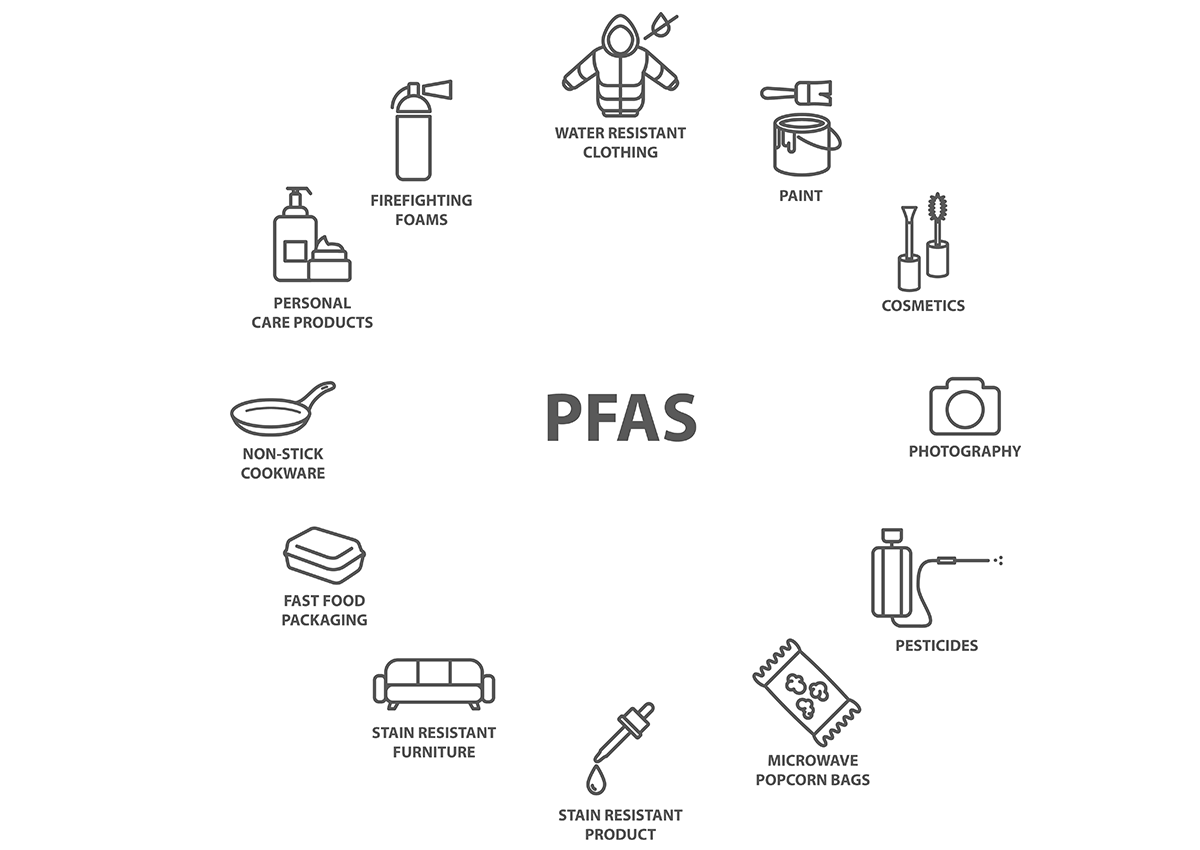
PFAS-related fluorinated compounds can be found in a wide variety of products, materials, and production processes. Depending on the application, different requirements arise for analysis, quality assurance, and regulatory assessment. Quality Analysis helps companies determine appropriate fluorine parameters and analytically evaluate products and materials.

Water and environmental samples
Depending on the specific research question, AOF and other total fluorine parameters can be used to analyze water, wastewater, and selected environmental samples. The results capture defined fluorine fractions and can serve as a basis for further technical or regulatory assessments.

Plastics
Fluorine-containing compounds may be present in plastics, additives, coatings, or production-related residues. Total fluorine parameters help to compare materials, identify unusual fluorine levels, and determine whether further investigation is needed.
Packaging
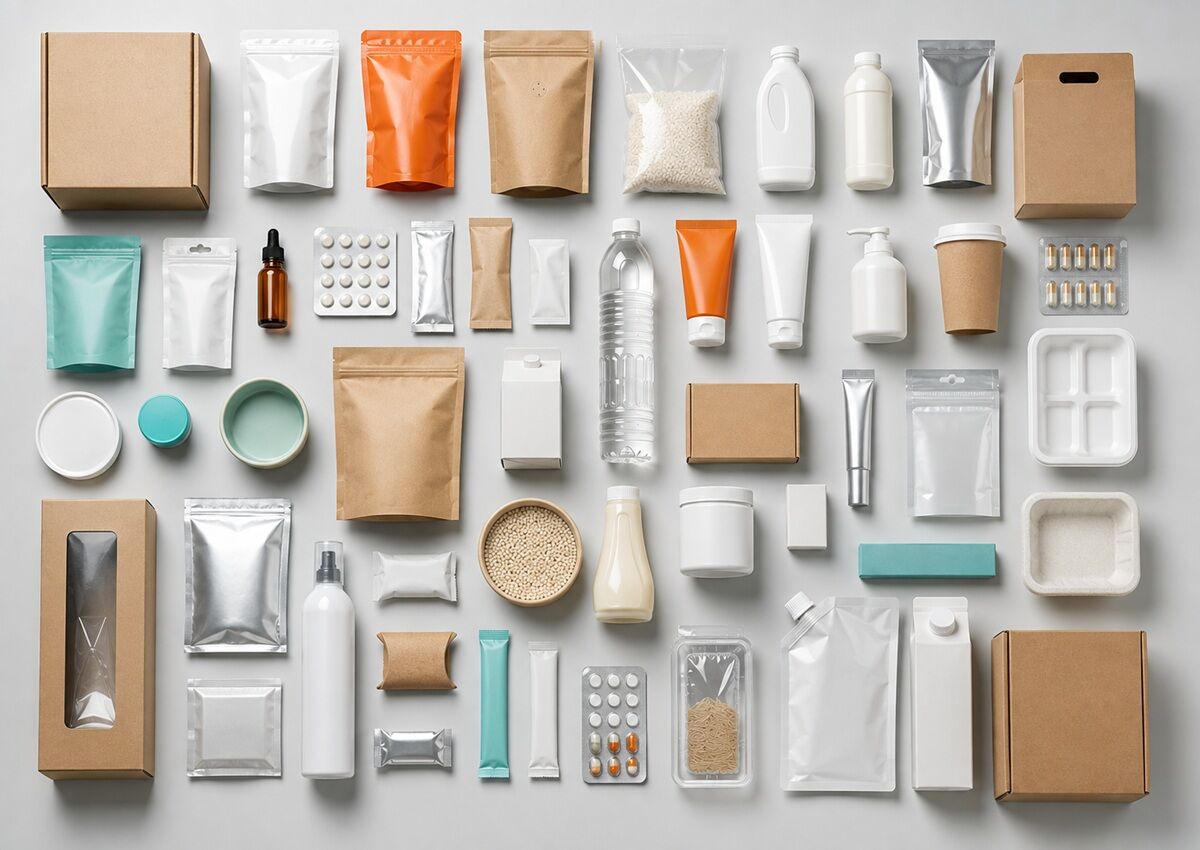
PFAS-related fluorinated compounds can be found particularly in coated papers and cardboard, plastics, and functional composite materials. Using appropriate total fluorine parameters, Quality Analysis helps manufacturers and distributors assess the fluorine content of packaging materials and obtain reliable data for quality assurance and regulatory requirements such as the PPWR .

Cosmetics
In cosmetic products, sum parameters can provide indications of organically or inorganically bound fluorine. However, individual PFAS are not identified in this way. The appropriate test depends on the product matrix and the research question.

Automotive
For seals, coatings, lubricants, and other components, total fluorine parameters can be used to characterize materials and compare different materials or product variants.

Textiles
In the textile industry, compliance with environmental standards and the safety of textile products—especially water-repellent and stain-resistant materials—are of the utmost importance. With our PFAS analysis services, we help manufacturers analytically assess fluorinated contaminants in textiles and obtain reliable data for material selection, quality assurance, and regulatory matters.

Toys & Baby Products
Toys and baby products may be made of plastics, textiles, coatings, and other materials. Total fluorine parameters can help identify fluorine-containing components and determine the need for further analytical clarification for subsequent material or product evaluation.
Here's how your PFAS analysis is conducted at Quality Analysis
1.
Request
Please describe your sample and the purpose of the test.
2.
Technical Clarification
We determine what analytical findings are required.
3.
Sample Selection
We will coordinate with you to determine the appropriate parameters, sample type, and required sample quantity.
4.
Sample Shipping
You send the approved sample to our lab.
5.
Analysis
We will analyze your sample using the selected methods and summary parameters.
6.
Results & Test Report
The analysis results are clearly documented in the test report.

Frequently asked questions about PFAS Analysis
Quality Analysis determines the PFAS-relevant total parameters TF, TOF, AOF, and EOF. Depending on the parameter and sample, the analysis is performed using appropriate sample preparation and combustion ion chromatography.
There is no single PFAS test that works for all materials. Water, plastics, packaging, textiles, and industrial components each require different analytical approaches. Quality Analysis therefore first assesses the sample and the purpose of the analysis and, based on that assessment, recommends the appropriate aggregate parameters.
PFAS screening using sum parameters is used to comprehensively detect relevant fluorinated fractions in a sample. The screening can provide indications of PFAS-related fluorinated compounds. However, it does not identify individual PFAS substances.
Quality Analysis determines the sum parameters TF, TOF, AOF, and EOF. The inorganically bound fluorine content is determined using the sum parameter TIF and is taken into account when calculating the organically bound fluorine content.
Total parameters are particularly well-suited for broad-scale screening of unknown fluorine-containing contaminants. Individual substance analyses are required when specific PFAS need to be identified or compared with substance-specific threshold levels. Both approaches address different questions and can complement one another.
The type and amount of sample required depend on the material, matrix, and selected analytical method. Before shipping, our experts will coordinate the sample requirements with you. This ensures that the analysis is appropriate for the specific research question.
An analytical non-detection result always applies to the method used, the parameter being tested, and the respective limit of detection or quantification. A blanket statement that no PFAS are present in a product cannot be automatically inferred from this.
The cost of a PFAS analysis depends on the sample matrix, the total parameters required, sample preparation, and the scope of the analysis. For this reason, the purpose of the analysis is first clarified in technical terms. Based on this, you will receive a testing strategy tailored to your needs and a corresponding quote.
The turnaround time depends on the sample, the analytical method, sample preparation, and the scope of the analysis. Our experts will coordinate the specific process and possible turnaround time with you as part of your inquiry.
Depending on the product and application, REACH, the POP Regulation, and product-specific EU requirements such as the PPWR may be particularly relevant. For electrical and electronic products, RoHS may also play a role. The specific analytical testing required depends on the applicable regulatory requirements.
Quality Analysis is accredited as a testing laboratory in accordance with DIN EN ISO/IEC 17025. The accreditation applies to the test methods listed in the current scope of accreditation. Whether the method used for a specific PFAS issue is accredited or performed as a validated in-house procedure will be clarified as part of the inquiry.


Analytical Methods and Sample Preparation
To determine various total fluorine parameters, Quality Analysis uses, among other methods, Combustion Ion Chromatography (CIC). Depending on the parameter and sample matrix, additional adsorption, extraction, or thermal preparation steps may be required.
The results refer to the total parameter analyzed in each case. It is not possible to identify individual PFAS using combustion ion chromatography alone.
Added Value in Quality Analysis
Speed
We can provide you with accurate analyses even on short notice. We have both the necessary personnel and the appropriate systems for determining total PFAS parameters.
Quality
We provide high-precision analyses to determine the PFAS total parameters TF, AOF, EOF, and TOF. In doing so, we rely on the highest level of technical expertise and adhere to scientific and regulatory standards.
Analysis Systems
Our technical equipment is specifically designed for the precise determination of total fluorine parameters for PFAS analysis. For sample preparation and analysis, we rely on state-of-the-art analytical systems from Metrohm.
Accreditation
The accreditation of our testing methods and laboratory facilities ensures safety, reliability, and objective analysis results.

Challenges in PFAS Analysis
PFAS analysis is challenging because more than 10,000 different compounds must be taken into account, and PFAS are often present only in very low concentrations. In addition, their properties can vary depending on the sample matrix. This makes it difficult to reliably determine the structures and concentrations of individual PFAS compounds.
Total parameter methods are therefore particularly valuable. They provide a comprehensive overview of PFAS-related fluorine contamination without having to identify each individual compound separately. As such, they provide an important basis for assessing contamination levels, ensuring compliance with relevant detection limits, and making further regulatory decisions.
Accredited test laboratory
for Chemical Analytics
As an independent testing laboratory accredited according to DIN EN ISO/IEC 17025, Quality Analysis supports you in assessing PFAS-related contamination with precise and transparently documented analysis results. Accreditation by the German Accreditation Body GmbH (DAkkS) confirms the technical competence and quality of our testing procedures. This provides you with a reliable foundation for quality assurance, material evaluations, and regulatory compliance.
More about the advantages our accreditation offers you here:

Quality Analysis
the right partner
for PFAS analytics
What can we analyze for you?
We would be pleased to advise you about the numerous possibilities and combined analytical methods. The goal: the best, most cost-effective and most efficient analysis of your component.