
Plastics analysis for all industries
Plastics play a key role in nearly every industry—from automotive and medical technology, to the toy industry to the packaging industry. The requirements for materials and components are correspondingly diverse.
With our accredited testing methods, we support manufacturers, processors and quality managers in reliably characterizing polymer-based materials, understanding their behavior under real-world conditions and resolving product-specific questions. This provides a robust foundation for material selection, product development, process optimization and damage investigation—enabling well-informed decisions along the entire value chain.
Typical Services for the Plastics Industry
Whether it’s material approval, production deviations, contamination, or component failure—we support you with targeted plastics analysis for quality assurance and root cause analysis. You can find an overview of the fundamentals and methods of plastics testing in our glossary: Fundamentals and methods of plastics inspection
Characterizing and Qualifying Materials
- Identifying Plastics and Polymers
- Determining and quantifying material composition
- Characterizing additives, plasticizers, and fillers
- Determine water content or moisture content
- Determine thermal properties such as melting and glass transition temperatures as well as decomposition behavior
- Compare materials or batches
Inspecting production quality and plastic components
- Examining dimensional accuracy and geometry
- Measuring wall thicknesses
- Examine porosity and inclusions using non-destructive or destructive methods
- Identify internal defects
- Analyze fiber orientation/distribution and, if applicable, fiber volume fraction in fiber-reinforced plastics
Suitable methods: Industrial computed tomography (CT), Optical metrology and Tactile 3D metrology
Testing for contaminants and undesirable substances
- Identify foreign substances and contaminants
- Detect particulate and chemical-film-based contaminants
- Analyze PAHs and selected organic compounds
- Analyze VOCs and solvents
- Analyze elements and heavy metals, e.g., lead, cadmium, chromium
- Determine total fluorine parameters as a potential PFAS screening method (TF, TOF)
Learn more about PFAS analysis and total fluorine parameters
Investigating Damage and Claims
- Cracks, Fractures, and Delamination
- Deformations and Warping
- Aging, degradation, and embrittlement
- Manufacturing and material defects
- Fracture surfaces and damage patterns
- Determine possible causes of component failure
You may also be interested in
Significant reduction in PFAS chemicals
PFAS chemicals, also known as forever chemicals, accumulate in the body and cause lasting damage to our organism.
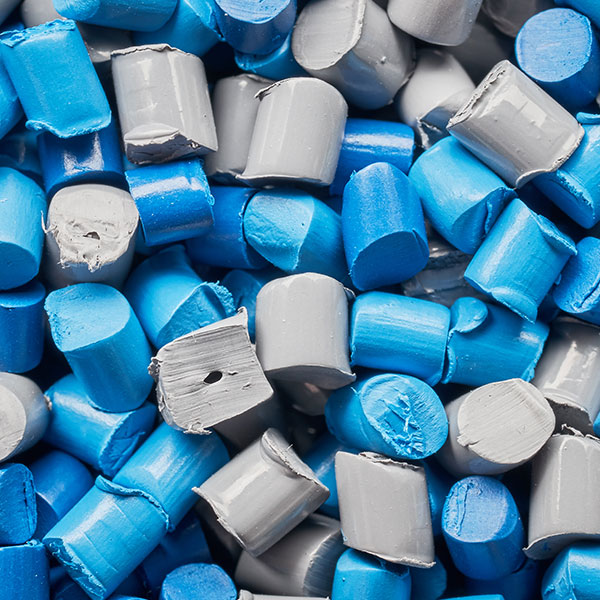
With sound expertise in plastics technology and high-performance analytics, we test polymer-based materials for their key properties – ensuring your components withstand the required loads and quality demands.
Added value at Quality Analysis
Speed
Thanks to our advanced measurement and analysis systems, you receive reliable results even at short notice - supporting fast development decisions, production approvals or failure investigations.
Variety of Analysis
Whether thermal, chemical, mechanical or geometric questions - we combine a wide range of testing and analytical methods, from DSC, TGA, FT-IR and GC-MS to microscopy, materialography, technical cleanliness verification and industrial computed tomography.
Analysis Systems
Our laboratories are equipped with high-resolution metrology and powerful analytical systems from leading manufacturers - ensuring reliable and reproducible evaluation of even complex components, materials and surfaces.
Accreditation
The accreditation of our inspection methods and measuring rooms according to DIN EN ISO/IEC 17025 guarantees maximum certainty, objectivity and quality - from sampling to the final test report.
Accredited test laboratory
for plastics testing
As a testing laboratory accredited according to DIN EN ISO/IEC 17025, we assist you with the analysis of plastic materials and components. Selected methods such as DSC, TGA, FTIR, PAH analysis, and moisture content determination fall within our accredited scope. Additional specialized testing and analysis services round out our offerings.
More about the advantages our accreditation offers to you:

Quality Analysis –
the right partner
for plastics analytics
What can we analyze for you?
We would be pleased to advise you about the numerous possibilities and combined analytical methods. Our goal: the best, most cost-effective and most efficient analysis of your material or component.