
Cleanroom classes
In some sectors, particularly strict requirements apply to the cleanliness of the working environment. Cleanrooms and sterilised production areas, in particular, must be protected from airborne particles, as even the smallest microscopic contamination can impair the quality of sensitive components. These cleanrooms are divided into different cleanroom classes (cleanliness classes) depending on the requirements.
Table of contents
- What is a cleanroom?
- Particle monitoring at Quality Analysis
- The standards for cleanrooms and cleanroom classes
- What cleanroom classes are there?
- Which factors influence the choice of cleanroom class?
- Monitoring particles: basis for stable processes
- Where are cleanrooms used?
- Cleanroom classes in summary

Contact us –
expert support is just a conversation away.
Using state-of-the-art analytical methods, we assist you with quality issues, damage claims, and development challenges – providing precise, well-founded, and solution-oriented support.

What is a cleanroom?
A cleanroom is a specially designed room in which the concentration of airborne particles is minimised and monitored. These controlled environments are crucial for research and production processes that require virtually particle-free conditions. The classification of cleanrooms is based on the particle concentration and indicates how many particles are permitted per cubic metre of air.
Determining and minimising contamination
The aim of a cleanroom is therefore to minimise contamination from various contaminants such as particles, dust or microorganisms to protect susceptible processes. However, it is also important to keep environmental factors under control outside of cleanrooms in many industrial sectors – for example while processing sensitive components or in laboratory environments. The origin of contamination is not always clear.
Particle monitoring
at Quality Analysis
We assist you with the monitoring of the particles in your working environment – whether for quality assurance, process control or in preparation for external audits. We offer the following methods and services for monitoring component cleanliness:
- Determination of ambient contamination by means of particle traps
- Monitoring of component and assembly cleanliness using particle stamps
- Assembly cleanliness in accordance with VDA 19.2
- Cause analyses for contamination and microbiological contaminants
- Analysis of metallic and non-metallic particles, fibres and filmic contamination
- Use of the latest analytical technologies such as SEM-EDX analysis, RAMAN and FTIR spectroscopy
- Documentation and evaluation in accordance with sector-specific standards
- Support during the optimisation of processes, materials and cleaning steps in the production environment
- Individual training courses in the context of VDA 19.1 and VDA 19.2
The standards for cleanrooms and cleanroom classes
Air purity in cleanrooms is regulated by international standards and guidelines that ensure environments fulfil the required level of cleanliness for various applications. The limit values for the related cleanroom class are specified in standards such as DIN EN ISO 14644-1, VDI 2083 and the EU GMP guidelines, Annex 1.
What cleanroom classes are there?
ISO 14644-1: class 1 to 9
DIN EN ISO 14644-1 is the internationally recognised standard for the classification of air cleanliness in cleanrooms and cleanroom-like environments and is therefore the most important standard. It specifies the maximum permissible number of particles per cubic metre of air for different particle sizes. Cleanrooms are categorised in classes from ISO 1 to ISO 9, with ISO 1 representing the cleanest and ISO 9 the least clean. VDI 2083 supplements ISO 14644 with practical recommendations and is used in the pharmaceutical sector, semiconductor manufacture and medical technology.
Table: ISO cleanroom classes according to DIN EN ISO 14644-1
| ISO class | Maximum permissible particle count per m³ of airt | |||||
|---|---|---|---|---|---|---|
| ≥ 0,1 µm | ≥ 0,2 µm | ≥ 0,3 µm | ≥ 0,5 µm | ≥ 1,0 µm | ≥ 5,0 µm | |
| ISO 1 | 10 | – | – | – | – | – |
| ISO 2 | 100 | 24 | 10 | – | – | – |
| ISO 3 | 1.000 | 237 | 102 | 35 | – | – |
| ISO 4 | 10.000 | 2.370 | 1.020 | 352 | 83 | – |
| ISO 5 | 100.000 | 23.700 | 10.200 | 3.520 | 832 | – |
| ISO 6 | 1.000.000 | 237.000 | 102.000 | 35.200 | 8.320 | 293 |
| ISO 7 | – | – | – | 352.000 | 83.200 | 2.930 |
| ISO 8 | – | – | – | 3.520.000 | 832.000 | 29.300 |
| ISO 9 | – | – | – | 35.200.000 | 8.320.000 | 293.000 |
Note: Entries with „–“ mean that no limit values have been specified for these sizes in the respective class.
GMP: cleanroom classes A to D
Annex 1 of the EU GMP (good manufacturing practice) guidelines contains specific requirements for the manufacture of sterile medicines. It specifies cleanroom classes from A to D, with A allowing the fewest particles and D the most. These guidelines are particularly relevant for the pharmaceutical industry and ensure that the products manufactured meet the highest quality and safety standards.
Table: GMP classes according to EU GMP guidelines, Annex 1
| Cleanroom class |
Maximum permissible particle count per m³ of air | |||
|---|---|---|---|---|
| ≥ 0,5 µm | ≥ 5,0 µm | |||
| Resting state | Operating state | Resting state | Operating state | |
| A | 3.520 | 3.520 | not defined | not defined |
| B | 3.520 | 352.000 | nnot defined | 2.930 |
| C | 352.000 | 3.520.000 | 2.930 | 29.300 |
| D | 3.520.000 | not specified | 29.300 | not specified |
Which factors influence the choice of cleanroom class?
The choice of cleanroom class depends on several decisive factors intended to ensure that the specific air cleanliness requirements for different applications and sectors are met. Here are some of the most important factors:
Type of product or process
The most important factor for the choice of cleanroom class is the type of product. Particularly clean environments are required for products susceptible to contamination, such as semiconductor chips, sterile medicines or implants. The process undertaken in the cleanroom is also crucial: high-precision coatings or aseptic filling processes require significantly stricter cleanliness conditions than, for example, the assembly of insensitive components. In less critical applications, lower cleanroom classes are often sufficient.
Applications and industry standards
Depending on the sector, different standards and regulatory requirements apply to cleanrooms. The pharmaceutical industry, for example, follows Annex 1 of the EU GMP guidelines that prescribe specific cleanliness classes for the manufacture of sterile products. In semiconductor manufacture, on the other hand, international ISO 14644 standards are used, while medical technology takes into account additional standards.
Sensitivity to particles and microorganisms
Another important factor is the sensitivity of the products manufactured to particles and microorganisms. In medical technology and biotechnology, it is crucial that products are not only free of particles, but also microbial contamination. This aspect influences the choice of cleanroom class and the necessary control measures.

Monitoring particles: basis for stable processes
The continuous monitoring of particles in cleanrooms is a central component of process control in sensitive production environments. The goal is to acquire and document critical environmental parameters such as airborne particles, organic residues, fibres or filmic contamination at an early stage. In this way, deviations from the required state can be detected, possible sources of contamination identified and targeted measures for process control derived.
Where are cleanrooms used?
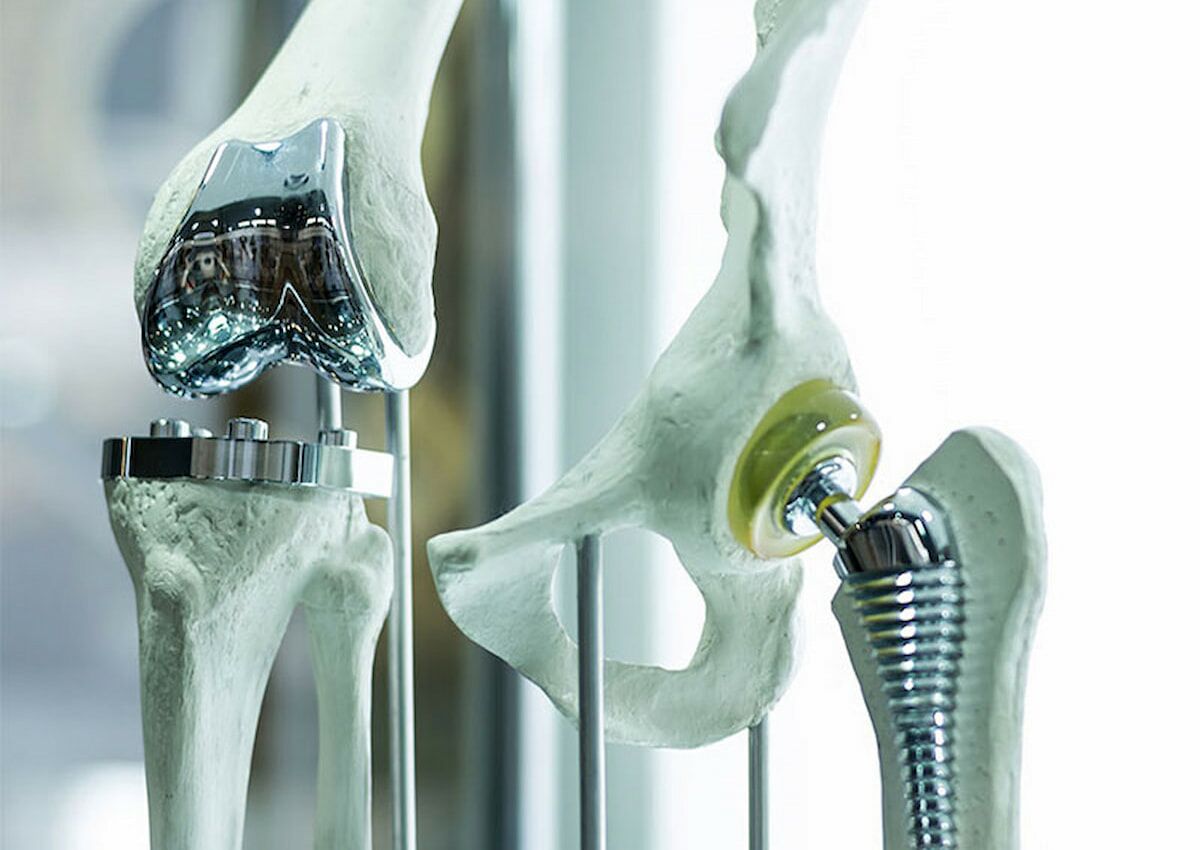
Medical technology
The manufacture of medical devices and implants in medical technology and the production of medicines and vaccines in the pharmaceutical industry require extremely high air purity. These processes therefore take place in cleanrooms with high cleanliness classes (e.g. ISO class 2 or special GMP classes).
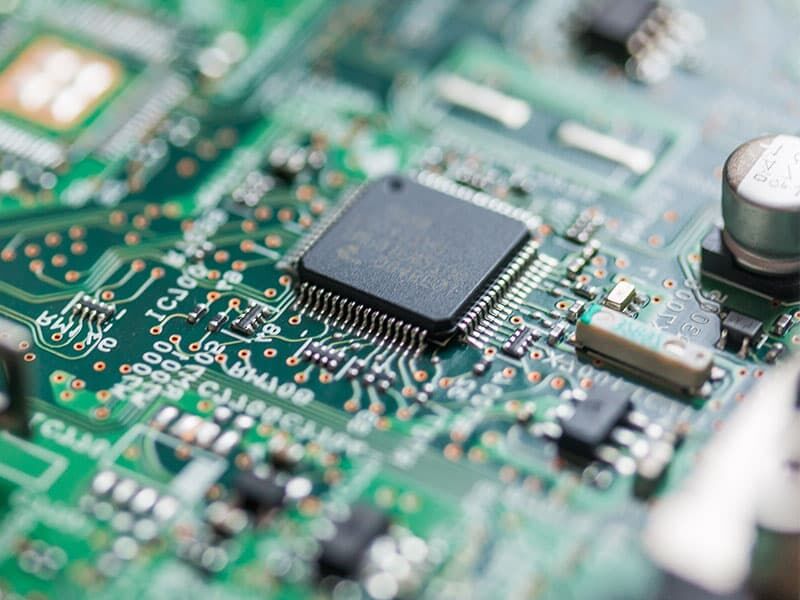
Electronics manufacturing
Cleanrooms are indispensable in the semiconductor industry, as particles in normal ambient air can disrupt susceptible integrated circuits and lead to malfunctions. Semiconductor manufacture therefore requires high levels of cleanliness (often ISO class 5 or higher) to enable the production of microchips and other electronic components in virtually particle-free conditions. This level of purity safeguards the functionality and reliability of the semiconductor products.
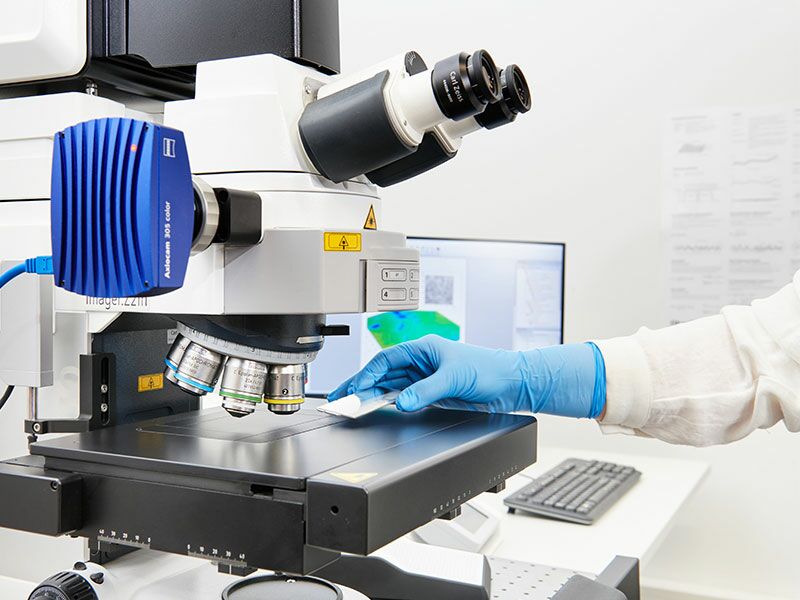
Material testing
Cleanrooms are also used in material testing to ensure a contamination-free environment for analysing and testing materials. This aspect is particularly important while analysing samples that are susceptible to contamination, for example in microscopy and chemical analytics. Cleanrooms ensure that the test results are accurate and reproducible, which is crucial for quality assurance and the development of new materials.
Cleanroom classes in summary
Cleanrooms are environments specially designed to minimize the concentration of airborne particles. These controlled environments are crucial for sectors such as the semiconductor and pharmaceutical industries, which require virtually particle-free conditions. Cleanroom classes, as specified in the standard DIN EN ISO 14644-1, categorise these rooms according to the maximum permissible particle concentration and particle size per cubic metre of air.